The Salon World
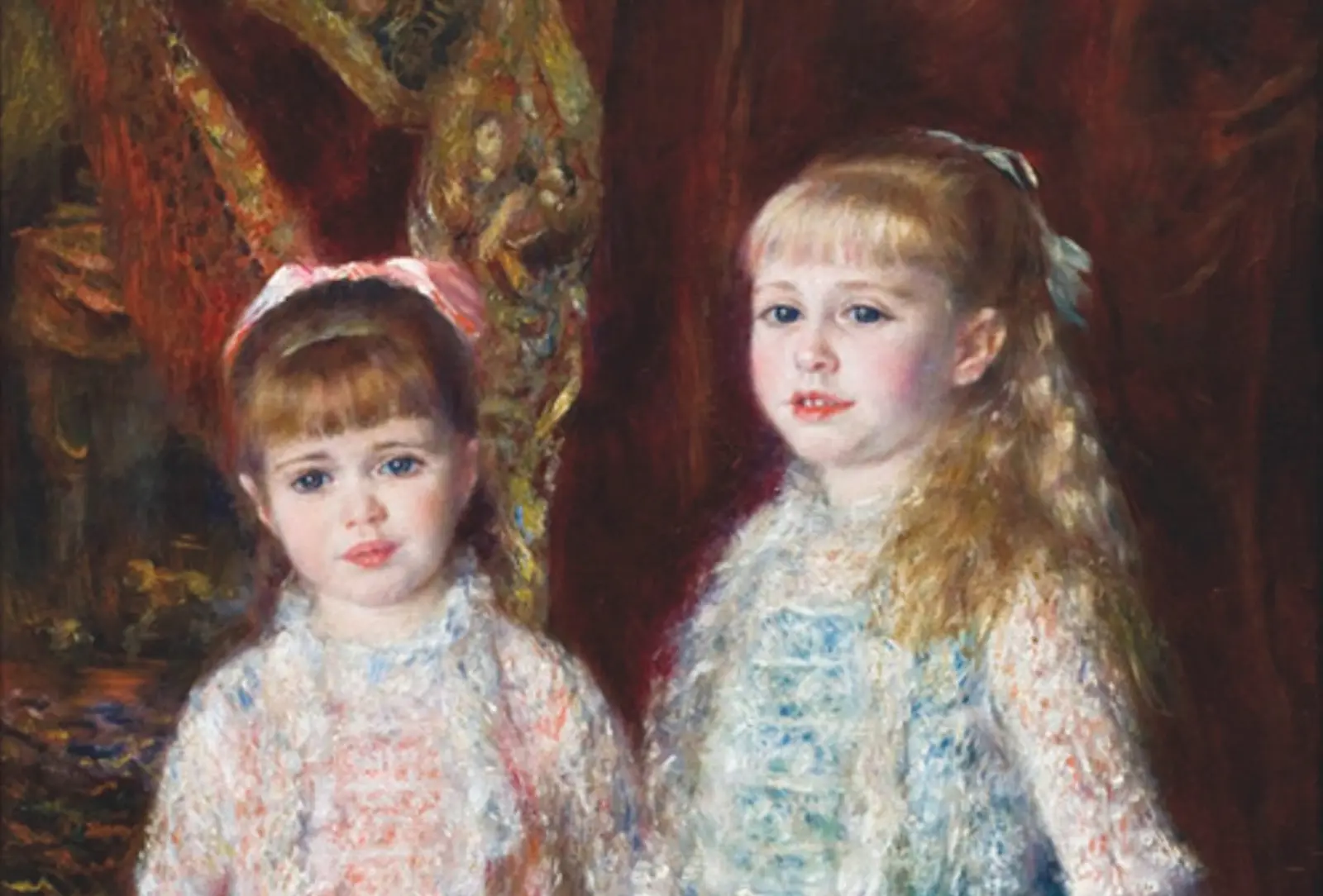
Renoir entered the Paris townhouse of the Cahen d’Anvers family. He painted a double portrait of Alice and Elisabeth. The girls were four and six years old. Their father, Louis, was a Jewish banker from Antwerp. Their mother, Louise, was a celebrated salonnière. The finished canvas shows cherubic girls with rosy cheeks. They hold hands in a sumptuous salon. They are wrapped in lace and satin.
Culture picks
 The Ultimate Superman Collection: Must‑Read Tales That Define a Hero
 Nicole Kidman's R-Rated Thriller Babygirl Moves to Hulu After HBO Max Exit
 Jim Lee Absolute Batman Art Featuring All-Star Collaborators Selling for an amount of yellow-dropping
 Forgotten Superman Spinoff Steel: A Bizarre Yet Unseen DC Flop
Catherine Ostler’s book, The Renoir Girls, centers on this work. It also features La Petite Irène, painted a year earlier. Louise was the artistic patron. Marcel Proust was a close friend. Her salon attracted artists, writers, and conservative Catholic aristocrats. Charles Ephrussi, her lover and an art critic, arranged the commission. He was suspected of being Alice’s biological father.
Two Parallel Realities
Ostler captures the collision of two worlds. It feels like a train slowing down in slow motion. One world was opulent. The other was marked by inequality. Political instability fueled antisemitism. This tension perforated the rarefied life of the sisters.
Despite the French Revolution and Napoleonic Code, antisemitism persisted. It took many forms. Renoir wrote to a friend complaining about Louis’s payment. He used derogatory language. Edmond de Goncourt, a frequent visitor, wrote poisonous diary entries. The Dreyfus Affair, from 1894 to 1906, marked the peak. A Jewish officer was framed for treason. The Cahen d’Anvers family supported Dreyfus. Some elite Jews seemed indifferent to this moral crisis.
Assimilation and Tragedy
Louise and Louis restored their castle to its former glory. They cultivated an eighteenth-century aesthetic. Meanwhile, the girls pursued assimilation. Elisabeth converted to Catholicism in 1895. She married a broke aristocrat and later divorced him. Alice, an Anglophile, met Colonel Charles Townshend in Egypt. They married in an Anglican ceremony in 1898. Irène left her arranged husband, Moïse de Camondo, for her secretary.
The carousels stopped with a shriek in the 1930s. The Nazi occupation brought persecution. The family had changed their name to sound more aristocratic. Irène’s son, Nissim de Camondo, died in World War I. They donated properties to the French state. Wealth and Enlightenment values could not save them. Four family members died in concentration camps. Elisabeth was betrayed by a local mayor in 1944. She died in or on the way to Auschwitz.