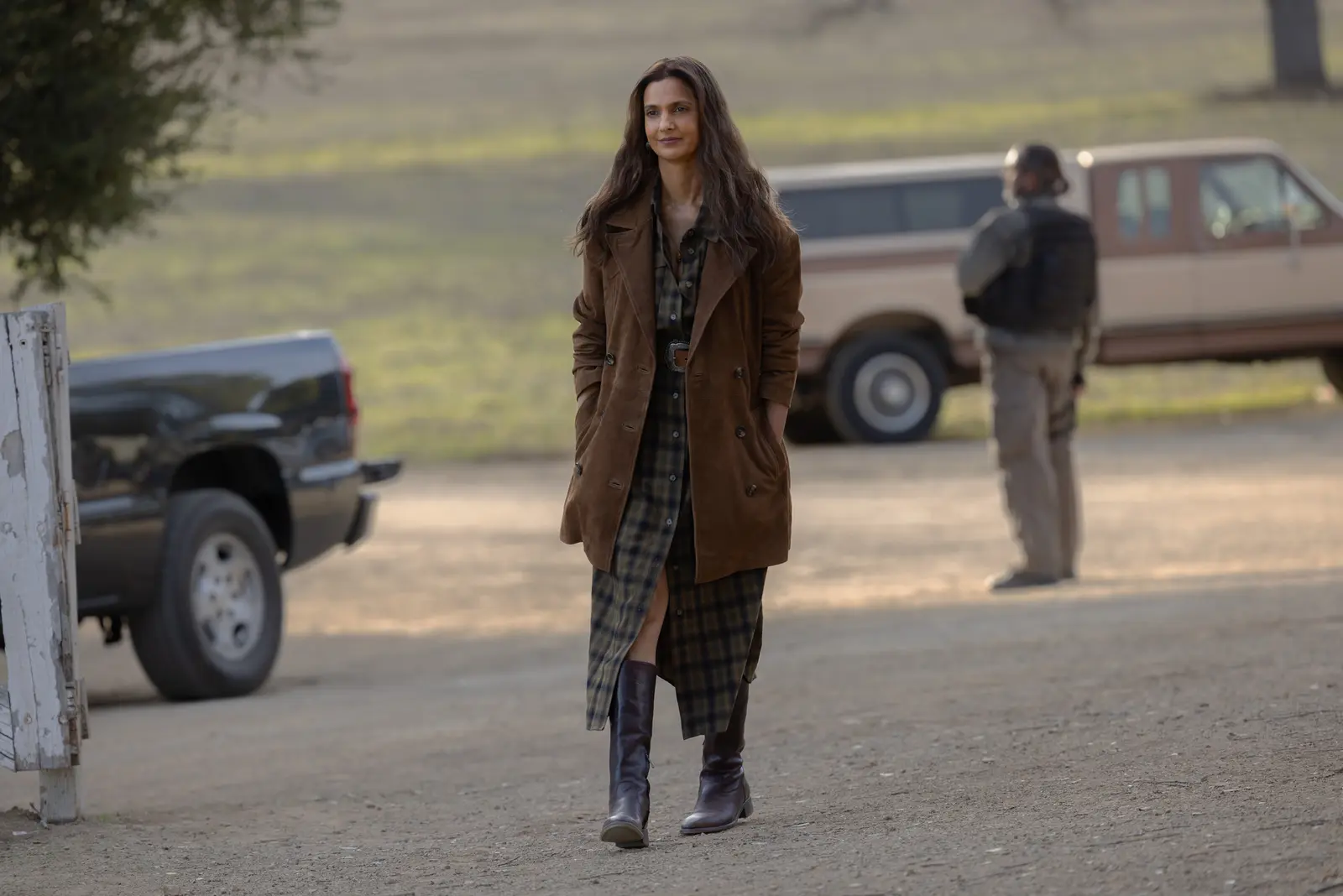
The Faustian Framework Behind Zoe’s Choice
The Netflix drama „Lanterns” aired its fifth episode, „Lights Out,” on September 12, 2026. In the episode, Zoe, played by Poorna Jagannathan, confronts a harrowing moral crossroads that reshapes the series’ trajectory. Jagannathan sat down with TV reporter Joe Otterson to dissect the character’s choices, describing the plot as a modern Faustian bargain.
Culture picks
 ABC’s 14‑Part Cyberpunk Series Calls for Black Mirror‑Level Recognition
 Star Trek: Strange New Worlds Announces Genre Shift for Final Six Episodes
 Céline Dion Returns to Paris Stage After Six-Year Absence
 BIGBANG Marks 20-Year Anniversary with MetLife Stadium Show
Jagannathan explained that Zoe’s decision to sacrifice a close ally for personal gain mirrors classic tales of ambition gone awry. The writers deliberately placed her in a scenario where every option carries a heavy ethical price, forcing her to choose between survival and integrity. Production notes reveal that the episode’s dark tone was heightened by a deliberately dim lighting scheme, reinforcing the theme of „lights out” both literally and metaphorically. Jagannathan praised the show’s willingness to push its protagonists into uncomfortable territory, arguing that such moments are essential for authentic storytelling.
The actress likened Zoe’s arc to the legend of Faust, where a pact with the devil yields short‑term power at a lasting cost. „Zoe is offered a deal that looks like a win,” Jagannathan said, „but the price is her soul, or at least a piece of it.” The scriptwriters confirmed that they drew inspiration from literary tragedies, embedding subtle references to the original Faust story in Zoe’s dialogue. The episode’s climax—Zoe signing a contract with a shadowy corporate entity—visually echoes the classic image of a pact sealed in ink. This deliberate parallel underscores the series’ exploration of how far individuals will go when faced with existential threats.
Why Does Zoe’s Descent Matter to the Series’ Future?
Zoe’s betrayal raises stakes for the ensemble cast, fracturing alliances that have driven the narrative thus far. Critics note that the ripple effect will likely reshape power dynamics, prompting other characters to reassess their loyalties. Jagannathan believes this turning point will deepen audience engagement, as viewers grapple with the moral ambiguity of rooting for a protagonist who has crossed a line. „When a character makes a choice that feels both inevitable and shocking, it forces the audience to confront their own values,” she observed. The show’s creators hinted that future episodes will explore the consequences of Zoe’s pact, potentially introducing new antagonists who seek to exploit her vulnerability.
The episode’s reception has been mixed, with some praising its boldness while others lament the loss of Zoe’s earlier optimism. Nonetheless, the conversation sparked by Jagannathan’s interview suggests that „Lanterns” will continue to dominate streaming discussions, especially as the series heads toward its season finale. The narrative gamble may pay off by cementing the show’s reputation for daring storytelling.
Frequently Asked Questions
What is the central conflict in „Lights Out”? Zoe must decide whether to betray a trusted friend to secure a powerful alliance, effectively making a Faustian bargain that endangers her moral compass.
How does Poorna Jagannathan describe Zoe’s decision? She calls it a „Faustian play,” emphasizing that the choice offers immediate advantage but extracts a deep, personal cost.
What can viewers expect in upcoming episodes? The series will likely examine the fallout of Zoe’s pact, introducing new threats and testing the loyalties of the remaining characters.