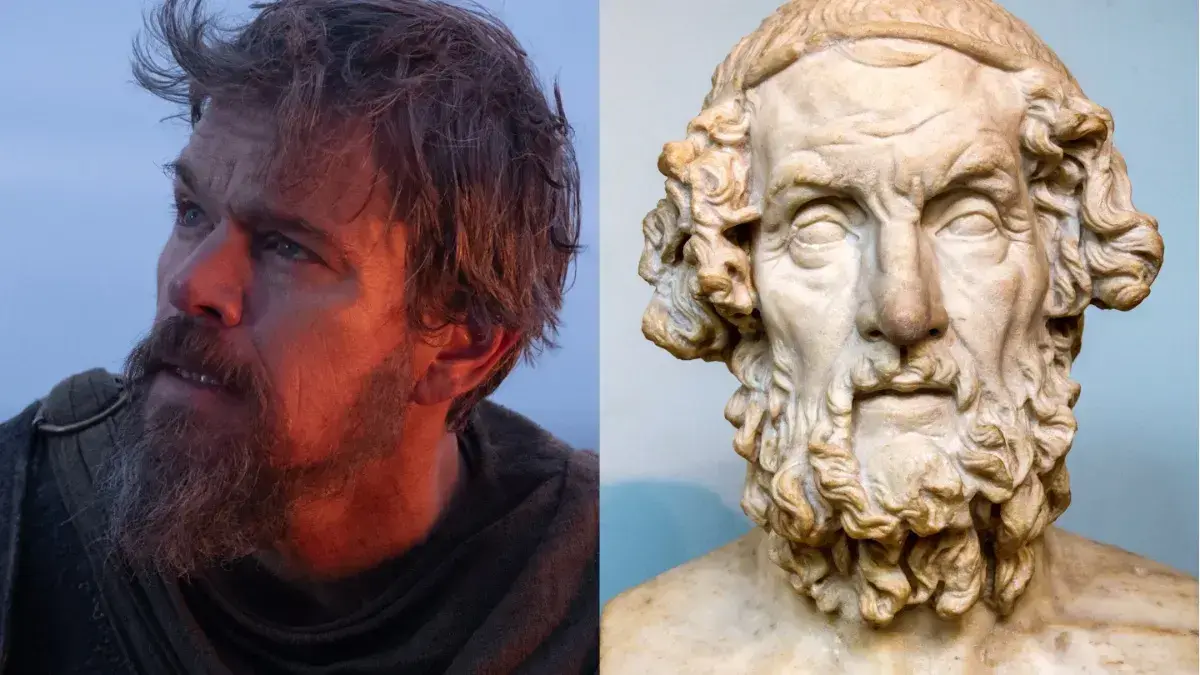
The Long Road Home in Nolan's Films
Filmmaker Christopher Nolan's body of work often explores similar themes to Homer's ancient epic, The Odyssey . Many of Nolan's most acclaimed movies feature protagonists who are husbands or fathers. These characters embark on long journeys, performing extraordinary or terrible deeds. Their ultimate goal is often to return to their concept of home after significant absences.
Culture picks
 New Shonen Jump Manga Fixes Long‑Standing Genre Flaw
 Clayface: DCU’s First R‑Rated Horror Film Set to Shock Gotham
 Prime Video Casts Rising Stars Esther McGregor and Emilio Sakraya as Violet and Xaden in New Romantasy Series
 MAMA Awards 2026 Set to Spotlight K‑Pop Powerhouses in Osaka
This recurring narrative structure draws striking parallels to Odysseus's arduous decade-long voyage. Both Nolan's heroes and the mythical king face immense challenges. They strive to reconnect with their families and the lives they left behind.
Consider films like Inception , Interstellar , and even Dunkirk to some extent. In Inception , Cobb is desperate to return to his children, a driving force behind his dream-sharing missions. Cooper in Interstellar travels across galaxies, enduring unimaginable distances and time dilation, all to reunite with his daughter. Even the soldiers in Dunkirk are primarily focused on escaping the battlefield and returning to safety.
How Do These Narratives Diverge?
These narratives are deeply rooted in the primal human desire for belonging. They highlight the sacrifices made and the psychological toll of separation. The heroes are often haunted by their past actions or the consequences of their choices. This internal struggle mirrors Odysseus's own battles with gods, monsters, and his own pride.
While thematic similarities exist, the execution differs significantly. Homer's Odyssey is a foundational myth, shaping Western literature for millennia. It features divine intervention, fantastical creatures, and a clear moral framework of heroism and retribution. Nolan's films, conversely, are typically grounded in science fiction or historical drama. They explore complex psychological states and often feature non-linear storytelling.
Nolan's characters are driven by personal stakes, often questioning reality itself. Odysseus, while a complex figure, operates within a more defined cosmic order. The scale of their respective journeys, though both epic, is framed by different worldviews. One explores the human condition through myth, the other through speculative realism.
Ultimately, both storytellers tap into universal themes of love, loss, and the enduring quest for home. Nolan's modern epics resonate because they echo ancient narratives, reinterpreting them for contemporary audiences. This connection underscores the timeless power of these fundamental human stories.
Frequently Asked Questions
What is the primary similarity between Nolan's films and The Odyssey ? The main similarity lies in the recurring theme of a husband or father undertaking a long, difficult journey to return to their idea of home and family. Both narratives explore the challenges and sacrifices involved in such a quest.
Which Christopher Nolan films best exemplify this theme? Inception , where Cobb seeks to return to his children, and Interstellar , where Cooper travels through space to reunite with his daughter, are strong examples. Dunkirk also touches on the theme of returning home from a perilous situation.
Are there significant differences in how these stories are told? Yes, The Odyssey is an ancient epic poem featuring gods and mythical creatures, while Nolan's films are modern cinematic works, often using science fiction or historical settings. Nolan's narratives frequently employ complex psychological exploration and non-linear structures.