A Controversial Cultural Artifact
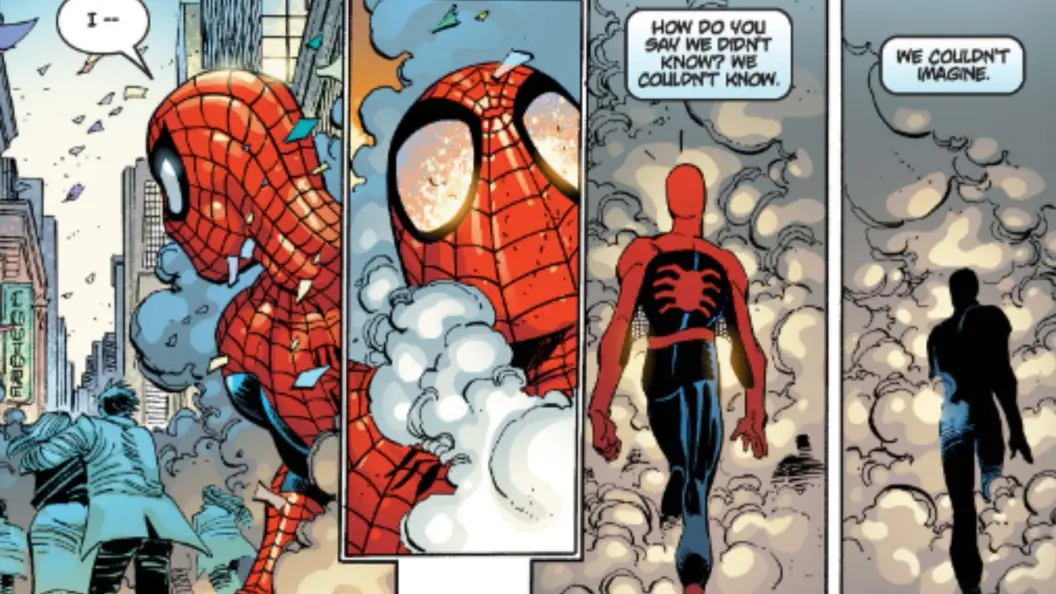
In Marvel's long publishing history, few issues sparked as much debate as The Amazing Spider-Man (Vol. 2) #36. Published in 2001, it directly addressed the aftermath of the September 11 attacks. It transformed a real tragedy into a narrative experience. Readers sought a framework to process the shock. In an era where pop culture commercializes collective emotions, this issue remains both fascinating and controversial.
Culture picks
 Sentinels May Ruin X-Men Before MCU Debut
 Broadway Opens Strong With Inter Alia and Galileo Previews
 Rami Malek Endorses Robert Pattinson As Next James Bond
 Tom Hiddleston Reveals How Loki Could Appear in Avengers Endgame: Encore
The Hero as a Mirror
Spider-Man's popularity is always discussed. Recent years clearly show he is likely the most loved character in the Marvel universe. The commercial success of the film added billions to Marvel Studios. The Spider-Verse films proved the hero's mythology appeals to a broad audience. The Ultimate Spider-Man (Vol. 3) magazine success confirms comic fans still adore the character. Spider-Man acts as a mirror for society. His hero with feet of clayapproach makes him accessible. Marvel often uses this character as a lens to view major world events.
Visual Meditation on Grief
The September 11 attacks were a massive global shock. Every form of pop culture had to confront it. The Amazing Spider-Man (Vol. 2) #36 hit the market on November 14, 2001. That was exactly two months and three days after the disasters. The creative team included Straczynski on script, John Romita Jr. on art, Scott Hanna on colors, Dan Kemp on lettering, Richard Starkings on composition, and Wes Abbott on editing. The structure is minimalist and direct. Spider-Man balances through Manhattan. He observes the attacks and rushes to Ground Zero for support. The panels show Marvel characters helping police and firefighters search for survivors among the ruins.
Discomfort and Parody
There is no dialogue in this issue. It is not a classic story, but rather a visual meditation. Straczynski used the hero as a voice for confusion, sadness, anger, and fear. For many readers, the issue served as a cathartic moment for a nation. Romita Jr., a lifelong New Yorker, drew with remarkable emotional intensity. He captured the essence of the place and moment. Though conceived as a tool for processing grief, time has turned it into one of Marvel's weirdest artifacts.
The Doctor Doom Moment
There is an inherent tension in the idea that September 11 happens in the Marvel Universe. This premise highlights an uncomfortable question: if superheroes exist, why couldn't they prevent such events? While comics often serve as a window to reality, this lens is not always appropriate. Some sections feel almost parodic, despite sincere intent. This creates aesthetic and narrative discomfort. One of the most famous moments is the image of Doctor Doom crying at Ground Zero. This scene became a massive internet meme. It symbolizes the general tonal weirdness. Before this image, the issue was emotional and moving. However, Doom's reaction breaks the illusion. He is practically the conceptual author of such disasters in the Marvel universe. Magneto and Kingpin are also present, but Doom's reaction seems most incongruent.
Shifting Perspectives Over Time
Perspectives on September 11 have changed significantly over the years. In the immediate aftermath, people were extremely sensitive to any humor or lightness. Today, Generation Z creates memes with September 11 themes. This shows how temporal distance allows a less passionate view of the past. This tonal shift in pop culture reflects the collective maturation of memory about that day.
Commercializing Grief
Confronting tragedy is always a challenge. Each individual processes events differently. In modern society, pop culture has become an essential component of life. We turn to it to find meaning in chaos. However, while an issue like The Amazing Spider-Man (Vol. 2) #36 can be a source of comfort, it also illustrates the commercialization of grief. It transforms a tragedy into a commercial product for the wealthy. There is something that may seem mildly disgusting in this dynamic, even when we acknowledge that the creators acted with good intentions.